

Business Growth Consultant in Brisbane & Gold Coast, QLD, Australia.
I’ve always had a wide-ranging — some might say eclectic — interest in ideas. While politics, religion, and history often spark debate, this list steers clear of subjects some may consider controversial and focuses on what’s most useful for business owners.
These are some of the books that have shaped how I think about leadership, strategy, and human behaviour. Some have challenged my assumptions; others have helped me sharpen my approach. You’ll find insights that apply across the board — from big-picture planning to day-to-day operations, and from team dynamics to personal growth.
I’ve also included a few tools for self-reflection. Because let’s face it - sometimes the most important work starts by looking in the mirror.
Whether these titles shift your thinking or simply reinforce what you already believe, I hope they prove valuable and help you move forward with clarity and confidence.
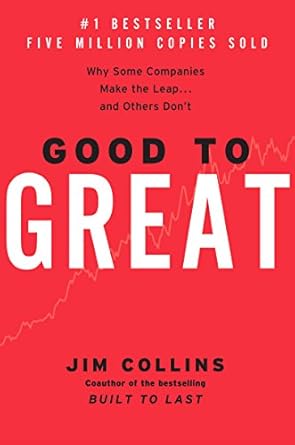
1. Good to Great - Jim Collins 2001
The importance of people in business can sometimes be overlooked, they are not merely commodities but key assets, Jim Collins provides good insight into the importance of not only having the right people but also having them in the right roles.
Why do some companies make the leap to sustained excellence while others don't? Jim Collins and his team spent years researching this fundamental question. "Good to Great" identifies the key principles that transform merely good companies into truly great, enduring performers. Discover the pivotal role of Level 5 Leadership (characterized by humility and fierce resolve), the importance of getting the right people "on the bus" before deciding where to drive it, and the powerful concept of the Hedgehog Principle (focusing on what you can be best in the world at, are deeply passionate about, and drives your economic engine). Collins provides rigorous, evidence-based insights into disciplined people, disciplined thought, and disciplined action. This isn't just theory; it's a practical blueprint for achieving breakthrough results. Essential reading for leaders committed to building something truly exceptional.
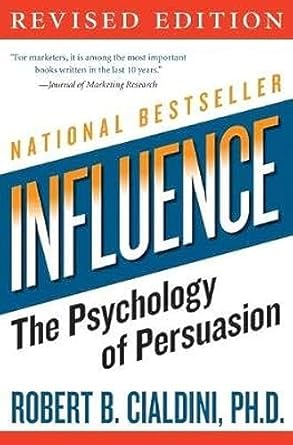
2. Influence, the psychology of persuasion - Robert B Cialdini 2009
Influence helps Managers and Sales personnel identify techniques to improve engagement for more successful outcomes; but be wary, influence can be a double-edged sword.
Master the science behind why people say "yes". Robert Cialdini, a renowned psychologist, spent decades researching the fundamental principles of persuasion. "Influence" distills this into six powerful weapons: Reciprocity, Commitment & Consistency, Social Proof, Liking, Authority, and Scarcity. Cialdini explains not just how these principles work, but crucially, why they trigger automatic compliance in human behavior. You'll learn how to ethically apply these principles in sales, negotiation, marketing, leadership, and everyday interactions, while also becoming adept at recognizing and defending against their misuse. Packed with fascinating real-world examples and research, this book is an indispensable toolkit for anyone who needs to lead, sell, persuade, or simply understand human decision-making better.
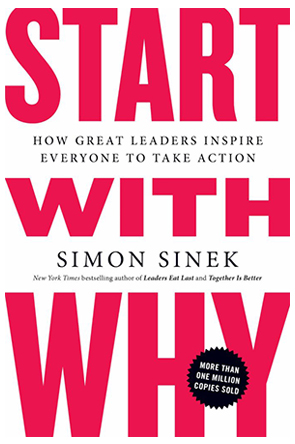
3. Start with Why - Simon Sinek 2009
A customer centric book that can reshape engagement and improve positioning. Focusing on what you are selling rather than why the customer has a need, can fall into marketing myopia. More importantly you may miss greater insights, broader opportunities and the chance to forge lasting ties with your customer through understanding.
What truly inspires action and loyalty? Simon Sinek's "Start with Why" presents a simple but revolutionary model: The Golden Circle. Most organizations know what they do and how they do it, but the most successful leaders and companies start with why – their core purpose, cause, or belief. Sinek argues that people don't buy what you do; they buy why you do it. By communicating from the inside out (Why -> How -> What), you tap into the part of the brain that drives behavior and fosters deep trust and loyalty. Drawing on examples like Apple and Martin Luther King Jr., Sinek shows how understanding and articulating your "Why" is the key to inspiring employees, captivating customers, and achieving lasting success. A must-read for defining your purpose-driven leadership.
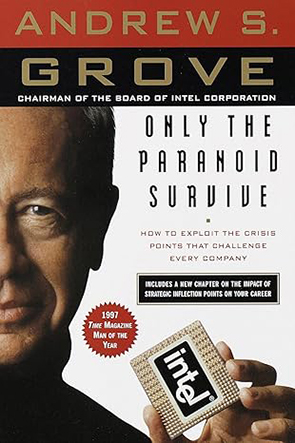
4. Only the Paranoid Survive - Andrew Grove 1988
Andy Grove discusses “Strategic Inflection Points”. These 10x changes or shifts that can impact business catastrophically if you are not continually questioning your business, beliefs and market understanding. It is important to ask uncomfortable questions and have this thread run through your Management team.
Navigate strategic inflection points and thrive in chaos. As the legendary CEO of Intel during turbulent times, Andrew Grove coined the term "Strategic Inflection Point" - a moment where fundamental industry changes threaten a company's very existence. Grove argues that only "paranoid" vigilance - constantly questioning assumptions, monitoring competitive forces (like the "10X change"), and being willing to make radical shifts – allows companies to survive and emerge stronger. Drawing from Intel's dramatic pivot from memory chips to microprocessors, he details how to recognize inflection points, confront brutal facts, foster constructive debate, and make courageous strategic decisions. This is a masterclass in crisis leadership, strategic agility, and building resilient organizations in an unpredictable world.
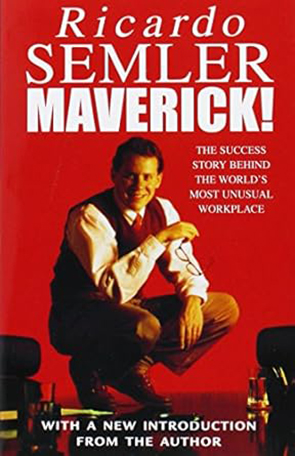
5. Maverick - Ricardo Semler 1988
Ricardo Semler created a unique working environment of trust and ownership. Could you accept entrusting your staff while on vacation, only to find that when you return, your office has not only moved, but it is smaller!! Revolutionary.
Radically rethink how to run a successful and human-centered organization. Ricardo Semler threw out the traditional management rulebook when he took over Semco, his family's manufacturing business in Brazil. "Maverick!" chronicles his extraordinary experiment in radical workplace democracy and trust. Semler eliminated hierarchies, dress codes, fixed working hours, and even let employees set their own salaries and choose their managers. He introduced profit-sharing, complete transparency (including open books), and empowered workers to make critical decisions. Against all odds, Semco thrived, becoming incredibly profitable and resilient. This inspiring, provocative book challenges every assumption about control, motivation, and leadership. It proves that treating employees like responsible adults, fostering true participation, and prioritizing happiness can be a powerful path to extraordinary business success.
6. The Goal - Eliyahu M Goldratt 1985
A great book for process improvements; subordinate everything to the bottleneck. In discussing his theory of constraints, Eliyahu M Goldratt encourages the reader to focus on what matters.
Learn vital business operations principles through a gripping story. "The Goal" isn't a dry textbook; it's a novel that follows plant manager Alex Rogo as he struggles to save his failing factory. Guided by an unconventional mentor, Jonah, Alex discovers the revolutionary principles of the Theory of Constraints (TOC). Goldratt masterfully illustrates how to identify the single bottleneck ("constraint") limiting your entire system's performance, optimize its flow, subordinate everything else to that constraint, and elevate it – then repeat the process. You'll grasp concepts like throughput, inventory, operational expense, and the importance of aligning actions with the overall system goal. This engaging narrative makes complex operational and management concepts accessible and unforgettable, teaching you to constantly improve processes and drive profitability.
7. Eat that Frog - Brian Tracy 2001
The very thing that you are avoiding is the thing that you should be working on – Brian Tracy provides methods to overcome procrastination and gain some focus.
Stop procrastinating and get more done! Brian Tracy's classic "Eat That Frog!" offers 21 practical, no-nonsense techniques for overcoming procrastination and boosting productivity. The title stems from Mark Twain's idea: if you eat a live frog first thing in the morning, nothing worse will happen to you all day. Your "frog" is your biggest, most important task – often the one you're most likely to put off. Tracy emphasizes tackling this task immediately each day. Learn how to plan every day in advance, apply the 80/20 rule (focus on the vital 20%), slice big tasks into manageable steps, create urgency, and single-task effectively. This concise, action-oriented book delivers immediate, actionable strategies for anyone drowning in tasks and seeking to accomplish more with less stress.
8. Accelerated Learning Techniques - Brian Tracy 1995
We all learn differently, the key is to understand what works for you. Brian Tracy helps to unravel many ways to improve learning.
Unlock your brain's potential to learn faster and remember more. Brian Tracy's "Accelerated Learning Techniques" provides a systematic approach to mastering new skills and information quickly and effectively. Move beyond outdated study habits. Tracy covers proven methods like mind mapping for visual organization, speed reading techniques, advanced note-taking systems, memory enhancement strategies (like association and visualization), and optimizing your learning environment and state. Discover how to identify your preferred learning style and leverage it, improve concentration, retain information long-term, and apply knowledge practically. Whether you're mastering a new software, industry knowledge, or a foreign language, this book equips you with the tools to drastically cut learning time and boost your competitive advantage through continuous, efficient skill acquisition.
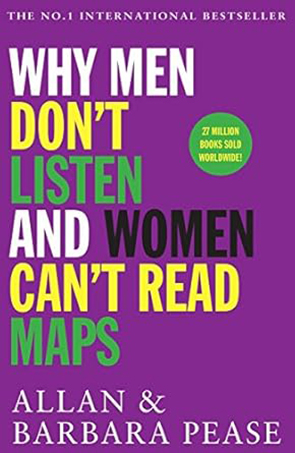
9. Why Men don't listen, and women can't read maps - Allan and Barbara Pease
This may seem an odd pick; however, it provides great insight into how (generally) Men and Women think; I found it easy reading and written with humour. More than anything Barbara and Allan Pease provide gender communication insights that can enhance communication.
Understand the fundamental differences to communicate and lead more effectively. The Peases delve into the fascinating world of male and female brain structure, biology, and evolutionary psychology to explain common misunderstandings. Why do men often focus on single tasks while women multitask? Why do men navigate by direction/distance while women use landmarks? Why do communication styles clash? This insightful and often humorous book explores differences in spatial perception, communication, stress response, emotional processing, and relationship needs. While avoiding harmful stereotypes, it provides valuable perspectives for improving communication, reducing friction in teams and partnerships, appreciating diverse viewpoints, and tailoring leadership approaches. Essential for anyone leading diverse teams or seeking stronger personal and professional relationships.
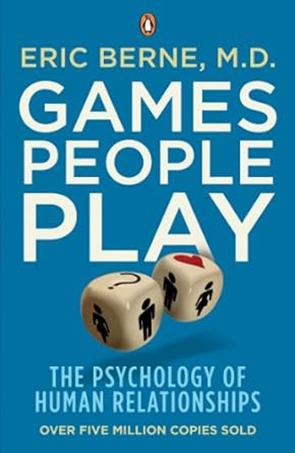
10. The Games People Play - Eric Berne 1964
A recommendation by a friend many years ago, and I am pleased he did. Whilst an academic book, if you can stick with it, it is very useful. By understanding discourse and behavior, Eric Berne helps with conflict resolution and recognising patterns of behavior. I often find myself referencing back to this when engaging others and understanding how to improve my own discourse or indeed understanding the behavior of others.
Uncover the hidden psychological scripts driving workplace and personal interactions. Eric Berne, founder of Transactional Analysis (TA), introduced the concept of psychological "games" – predictable, often dysfunctional patterns of communication where people operate from different ego states (Parent, Adult, Child). "The Games People Play" identifies and analyzes dozens of these common games (like "Why Don't You... Yes But," "Blemish," "Now I've Got You"), revealing their ulterior motives and payoffs. Understanding TA provides a powerful lens to see beneath surface interactions, recognize manipulation, avoid getting drawn into unproductive dynamics, and foster healthier, more authentic "Adult-to-Adult" communication. This classic remains profoundly relevant for leaders, coaches, and anyone seeking to improve interpersonal dynamics and reduce workplace drama.
Deepen Your Strategic Thinking: Foundational Academic Frameworks
Over the years, I’ve encountered a wide range of academic papers – some well-known, others less so. While many of these works have been around for a while, I suspect they’re often overlooked in the day-to-day rush of running a business.
This list isn’t meant to be exhaustive or definitive. It’s a curated selection of papers that have shaped how I think about strategy, leadership, and organisational behaviour. They’ve helped me ask better questions, challenge assumptions, and refine the way I support businesses to grow and adapt.
Though not my only source of insight – as the broader reading list shows – these academic pieces continue to offer valuable perspectives worth revisiting. I hope they spark fresh thinking, or at the very least, remind us of the foundational ideas that still hold relevance today.
1. Double Loop Learning, Chris Agyris
Most businesses fix problems without asking why they happen. Argyris says real learning means questioning your assumptions, not just your actions. It’s about changing how you think, not just what you do — a powerful mindset shift for leaders who want lasting change, not just what may be quick fixes.
Move beyond fixing symptoms to transforming thinking. Chris Argyris's groundbreaking concept of Double Loop Learning challenges how organizations approach problem-solving. Most of us practice Single Loop Learning: we detect an error (e.g., missed sales target) and fix it by adjusting our actions (e.g., push sales team harder), without questioning the underlying goals or assumptions (e.g., "Is our sales strategy flawed?"). Double Loop Learning goes deeper. It involves critically examining and changing the governing variables, assumptions, policies, and objectives themselves that led to the action in the first place. Why This Matters for Leaders: This paper provides the intellectual bedrock for building truly learning organizations. It equips leaders to foster cultures, where challenging the status quo, questioning deep-seated beliefs ("the way we've always done it"), and adapting core strategies based on evidence is not just allowed, but encouraged. Essential for navigating complex challenges where surface-level fixes fail.
2. The S Curves of Innovation, Rick Brown 1991
I see Brown’s S Curves of innovation as a means of rethinking product development and extending the product lifecycle through multiple S Curves. Staying ahead means managing multiple innovations at once - not riding one wave until it crashes.
Master the lifecycle of innovation to avoid obsolescence and seize the next wave. Rick Brown's influential paper provides a crucial framework for understanding and strategically managing technological and product lifecycles, visualized as overlapping S-curves. Every successful innovation follows a predictable pattern: a slow, uncertain introduction phase, followed by rapid growth as adoption accelerates, eventually reaching maturity and then decline. Brown's critical insight is that market leadership requires managing multiple, overlapping S-curves simultaneously.
3. Competitive forces that shape strategy, Michael E Porter 1979
Porter’s model helps you seek to understand what really drives competition in your industry. It’s not just rivals — it’s also new players, suppliers, customers, and substitutes. Use this to spot threats, find opportunities, and build a stronger position in your market.
The Five Competitive Forces That Shape Strategy by Michael E. Porter (HBR Article, 1979).
See the true competitive landscape clearly. Michael Porter's iconic Five Forces framework, introduced in this Harvard Business Review article, provides a rigorous tool for analyzing the structural attractiveness and profit potential of any industry. It moves beyond simple competitor analysis to examine five fundamental forces: 1. Threat of New Entrants, 2. Bargaining Power of Suppliers, 3. Bargaining Power of Buyers, 4. Threat of Substitute Products or Services, and 5. Intensity of Rivalry Among Existing Competitors. Why This Matters for Leaders: This isn't just theory; it's a practical diagnostic tool. It helps leaders understand where industry profits are concentrated, identify the root causes of competition, assess vulnerabilities, and pinpoint strategic opportunities to build sustainable advantage. Use it to evaluate market entry, position your business defensively, or anticipate industry shifts.
4. Strategies for Diversification, H Igor Ansoff 1957
Ansoff’s matrix gives four clear paths to grow: sell more to current customers, find new markets, create new products, or do both. It’s a simple way to weigh risk and reward when planning your next move.
Strategies for Diversification by H. Igor Ansoff (HBR Article, 1957).
Navigate growth strategy choices systematically. Igor Ansoff's classic Ansoff Matrix, introduced in this HBR article, provides a simple yet powerful 2x2 framework for evaluating growth strategies based on Products (Existing vs. New) and Markets (Existing vs. New). This yields four core strategies: Market Penetration (sell more existing products to existing markets), Market Development (sell existing products to new markets), Product Development (sell new products to existing markets), and Diversification (sell new products to new markets). Why This Matters for Leaders: The Ansoff Matrix offers a structured way to assess the inherent risk and potential reward of different growth paths. It forces clarity: Are you leveraging your core strengths in known territory? Or venturing into higher-risk/higher-reward diversification? This tool is crucial for strategic planning discussions, resource allocation, and managing growth ambitions realistically.
5. The balanced Scorecard, Robert S Kaplan and David P Norton 1992
Don’t just measure money. The Balanced Scorecard adds customer satisfaction, internal processes, and team growth to the mix. It helps leaders track what really drives success — and turn strategy into action across the whole business.
Conceptual Foundations of the Balanced Scorecard by Robert S. Kaplan & David P. Norton (Paper, often linked to their HBR articles & books).
Measure what matters – beyond just finance. Kaplan and Norton's Balanced Scorecard (BSC) revolutionized performance management. This foundational paper outlines the core concept: supplementing traditional financial metrics with measures from three additional perspectives: Customer, Internal Business Processes, and Learning & Growth. This creates a "balanced" view of organizational performance, linking short-term actions to long-term strategic objectives through Strategy Maps and cascading goals. Why This Matters for Leaders: The BSC provides the blueprint for moving from a narrow financial focus to a holistic view of strategy execution. It helps leaders articulate strategy clearly, align teams around shared objectives, track leading indicators (not just lagging financials), and foster continuous improvement across all critical value drivers. Essential for translating vision into measurable action.
If you would like to discuss these or other publications and how the methods discussed might be employed for your business, call or book a meeting.