

Business Growth Consultant in Brisbane & Gold Coast, QLD, Australia.
Having a broad, if somewhat eclectic taste in subject matter, I have come across a wide range of material; they say never discuss Politics or Religion, and we should include History too; so, this is a focus on business relevant articles. Valuing foundational leadership principles and niche behavioural insights, my desire is to share some publications that have influenced how I think, at times encouraging me to rethink beliefs and understanding. This selection of books is used when thinking of business on strategic, operational and interpersonal levels. Also thrown into the mix are tools for personal development; it does not hurt to look in the mirror. Hopefully these are found useful and educate or even simply reinforce beliefs and enhance resolve.
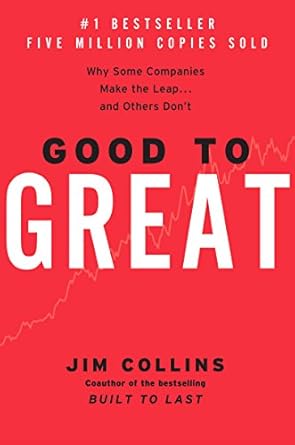
1. Good to Great by Jim Collins
Why do some companies make the leap to sustained excellence while others don’t? Jim Collins and his team spent years researching this fundamental question. “Good to Great” identifies the key principles that transform merely good companies into truly great, enduring performers. Discover the pivotal role of Level 5 Leadership (characterized by humility and fierce resolve), the importance of getting the right people “on the bus” before deciding where to drive it, and the powerful concept of the Hedgehog Principle (focusing on what you can be best in the world at, are deeply passionate about, and drives your economic engine). Collins provides rigorous, evidence-based insights into disciplined people, disciplined thought, and disciplined action. This isn’t just theory; it’s a practical blueprint for achieving breakthrough results. Essential reading for leaders committed to building something truly exceptional.
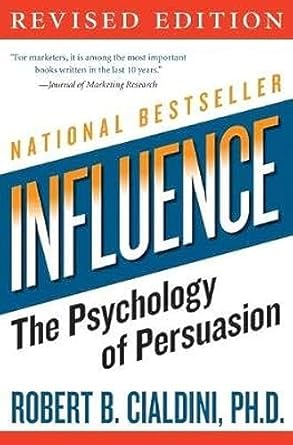
2. Influence: The Psychology of Persuasion by Robert B. Cialdini
Master the science behind why people say “yes”. Robert Cialdini, a renowned psychologist, spent decades researching the fundamental principles of persuasion. “Influence” distills this into six powerful weapons: Reciprocity, Commitment & Consistency, Social Proof, Liking, Authority, and Scarcity. Cialdini explains not just how these principles work, but crucially, why they trigger automatic compliance in human behavior. You’ll learn how to ethically apply these principles in sales, negotiation, marketing, leadership, and everyday interactions, while also becoming adept at recognizing and defending against their misuse. Packed with fascinating real-world examples and research, this book is an indispensable toolkit for anyone who needs to lead, sell, persuade, or simply understand human decision-making better.
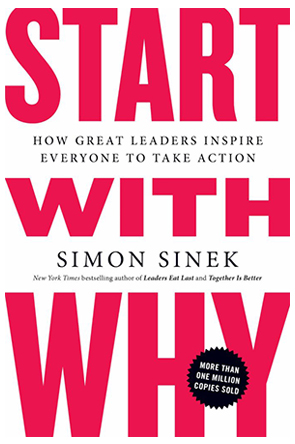
3. Start with Why by Simon Sinek
What truly inspires action and loyalty? Simon Sinek’s “Start with Why” presents a simple but revolutionary model: The Golden Circle. Most organizations know what they do and how they do it, but the most successful leaders and companies start with why – their core purpose, cause, or belief. Sinek argues that people don’t buy what you do; they buy why you do it. By communicating from the inside out (Why -> How -> What), you tap into the part of the brain that drives behavior and fosters deep trust and loyalty. Drawing on examples like Apple and Martin Luther King Jr., Sinek shows how understanding and articulating your “Why” is the key to inspiring employees, captivating customers, and achieving lasting success. A must-read for defining your purpose-driven leadership.
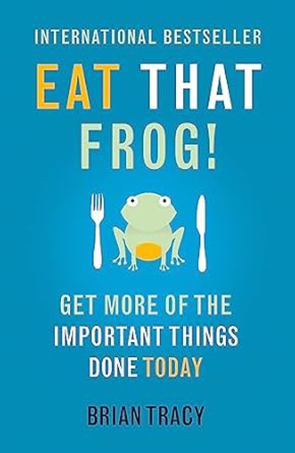
4. Eat That Frog! by Brian Tracy
Stop procrastinating and get more done! Brian Tracy’s classic “Eat That Frog!” offers 21 practical, no-nonsense techniques for overcoming procrastination and boosting productivity. The title stems from Mark Twain’s idea: if you eat a live frog first thing in the morning, nothing worse will happen to you all day. Your “frog” is your biggest, most important task – often the one you’re most likely to put off. Tracy emphasizes tackling this task immediately each day. Learn how to plan every day in advance, apply the 80/20 rule (focus on the vital 20%), slice big tasks into manageable steps, create urgency, and single-task effectively. This concise, action-oriented book delivers immediate, actionable strategies for anyone drowning in tasks and seeking to accomplish more with less stress.
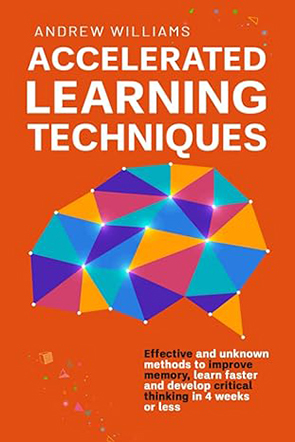
5. Accelerated Learning Techniques by Brian Tracy
Unlock your brain’s potential to learn faster and remember more. Brian Tracy’s “Accelerated Learning Techniques” provides a systematic approach to mastering new skills and information quickly and effectively. Move beyond outdated study habits. Tracy covers proven methods like mind mapping for visual organization, speed reading techniques, advanced note-taking systems, memory enhancement strategies (like association and visualization), and optimizing your learning environment and state. Discover how to identify your preferred learning style and leverage it, improve concentration, retain information long-term, and apply knowledge practically. Whether you’re mastering a new software, industry knowledge, or a foreign language, this book equips you with the tools to drastically cut learning time and boost your competitive advantage through continuous, efficient skill acquisition.
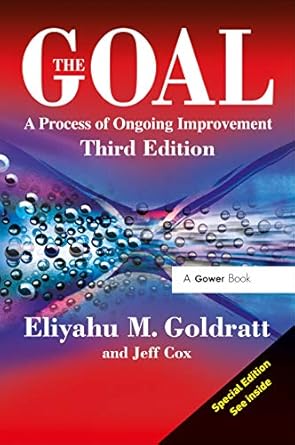
6. The Goal: A Process of Ongoing Improvement by Eliyahu M. Goldratt
Learn vital business operations principles through a gripping story. “The Goal” isn’t a dry textbook; it’s a novel that follows plant manager Alex Rogo as he struggles to save his failing factory. Guided by an unconventional mentor, Jonah, Alex discovers the revolutionary principles of the Theory of Constraints (TOC). Goldratt masterfully illustrates how to identify the single bottleneck (“constraint”) limiting your entire system’s performance, optimize its flow, subordinate everything else to that constraint, and elevate it – then repeat the process. You’ll grasp concepts like throughput, inventory, operational expense, and the importance of aligning actions with the overall system goal. This engaging narrative makes complex operational and management concepts accessible and unforgettable, teaching you to constantly improve processes and drive profitability.
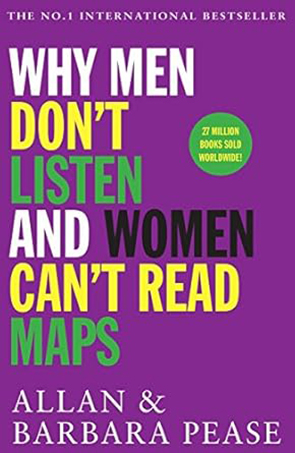
7. Why Men Don’t Listen & Women Can’t Read Maps by Allan & Barbara Pease
Understand the fundamental differences to communicate and lead more effectively. The Peases delve into the fascinating world of male and female brain structure, biology, and evolutionary psychology to explain common misunderstandings. Why do men often focus on single tasks while women multitask? Why do men navigate by direction/distance while women use landmarks? Why do communication styles clash? This insightful and often humorous book explores differences in spatial perception, communication, stress response, emotional processing, and relationship needs. While avoiding harmful stereotypes, it provides valuable perspectives for improving communication, reducing friction in teams and partnerships, appreciating diverse viewpoints, and tailoring leadership approaches. Essential for anyone leading diverse teams or seeking stronger personal and professional relationships.
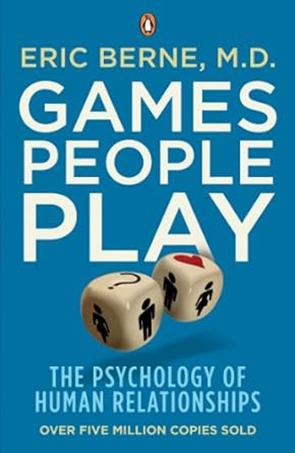
8. The Games People Play by Eric Berne
Uncover the hidden psychological scripts driving workplace and personal interactions. Eric Berne, founder of Transactional Analysis (TA), introduced the concept of psychological “games” – predictable, often dysfunctional patterns of communication where people operate from different ego states (Parent, Adult, Child). “The Games People Play” identifies and analyzes dozens of these common games (like “Why Don’t You… Yes But,” “Blemish,” “Now I’ve Got You”), revealing their ulterior motives and payoffs. Understanding TA provides a powerful lens to see beneath surface interactions, recognize manipulation, avoid getting drawn into unproductive dynamics, and foster healthier, more authentic “Adult-to-Adult” communication. This classic remains profoundly relevant for leaders, coaches, and anyone seeking to improve interpersonal dynamics and reduce workplace drama.
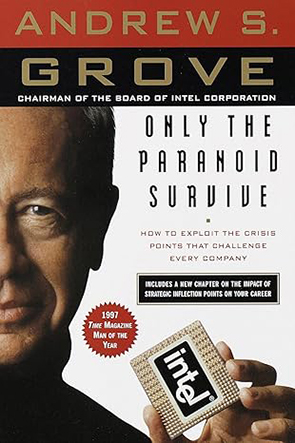
9. Only the Paranoid Survive by Andrew S. Grove
Navigate strategic inflection points and thrive in chaos. As the legendary CEO of Intel during turbulent times, Andrew Grove coined the term “Strategic Inflection Point” – a moment where fundamental industry changes threaten a company’s very existence. Grove argues that only “paranoid” vigilance – constantly questioning assumptions, monitoring competitive forces (like the “10X change”), and being willing to make radical shifts – allows companies to survive and emerge stronger. Drawing from Intel’s dramatic pivot from memory chips to microprocessors, he details how to recognize inflection points, confront brutal facts, foster constructive debate, and make courageous strategic decisions. This is a masterclass in crisis leadership, strategic agility, and building resilient organizations in an unpredictable world.
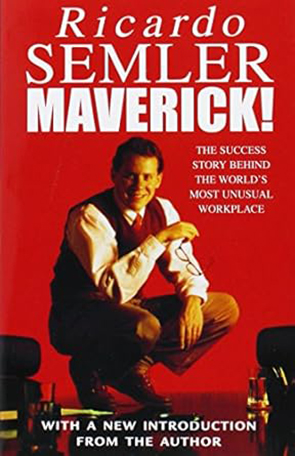
10. Maverick! by Ricardo Semler
Radically rethink how to run a successful and human-centered organization. Ricardo Semler threw out the traditional management rulebook when he took over Semco, his family’s manufacturing business in Brazil. “Maverick!” chronicles his extraordinary experiment in radical workplace democracy and trust. Semler eliminated hierarchies, dress codes, fixed working hours, and even let employees set their own salaries and choose their managers. He introduced profit-sharing, complete transparency (including open books), and empowered workers to make critical decisions. Against all odds, Semco thrived, becoming incredibly profitable and resilient. This inspiring, provocative book challenges every assumption about control, motivation, and leadership. It proves that treating employees like responsible adults, fostering true participation, and prioritizing happiness can be a powerful path to extraordinary business success.
Deepen Your Strategic Thinking: Foundational Academic Frameworks
Having come across many academic papers in my career, these are a few that may, or may not, be familiar. If known, I do wonder if they are sometimes forgotten in the malaise of doing business. Although not my single source of, let’s say, inspiration, as can be seen from the reading list, these papers nonetheless contribute to shaping my thinking and the development of strategies to assist business to question, analyse and grow.
If you would like to discuss these or other publications and how the methods discussed might be employed for your business, call or book a meeting.